Major Celestial Events Visible from Singapore in 2026
Singapore's equatorial latitude (1.35 degrees North) grants access to events in both celestial hemispheres. The following list covers events observable without specialised equipment from Bortle 7 or better conditions, unless otherwise noted.
Meteor Showers
| Shower | Peak Dates | ZHR | Moon Phase | Visibility from SG |
|---|---|---|---|---|
| Quadrantids | 3-4 January | 110 | Waxing crescent | Low radiant (northern shower) |
| Eta Aquariids | 5-6 May | 50 | Waning gibbous | Excellent (radiant high pre-dawn) |
| Southern Delta Aquariids | 29-30 July | 25 | New Moon | Very good (overhead radiant) |
| Perseids | 12-13 August | 100 | Waning crescent | Moderate (low northern radiant) |
| Geminids | 14-15 December | 150 | Waxing crescent | Good (radiant rises by 21:00) |
The Eta Aquariids in May and Southern Delta Aquariids in late July represent the best shower opportunities for Singapore's latitude. Both radiants pass near the zenith during the pre-dawn hours, maximising the number of visible meteors.
Planetary Events
- Saturn opposition - 21 September 2026: Saturn reaches its closest approach to Earth and is visible all night. The rings remain in a nearly edge-on configuration (tilt angle approximately 3.7 degrees), making this a historically unusual viewing opportunity. Through a 150mm telescope at 150x, the razor-thin ring line becomes visible alongside the shadow of the globe on the ring plane.
- Jupiter opposition - 3 November 2026: Jupiter dominates the evening sky at magnitude -2.8. The four Galilean moons are easily resolved through any telescope, and atmospheric belt detail becomes visible at 80x or higher magnification.
- Mars closest approach - 19 January 2027: While technically early 2027, Mars grows increasingly bright throughout late 2026. By December, its disc diameter reaches 14 arcseconds, large enough to reveal surface features through a 200mm telescope.
- Venus greatest elongation (evening) - 6 June 2026: Venus sits 45 degrees east of the Sun, setting more than 3 hours after sunset. Through a telescope, the planet displays a half-phase (dichotomy) resembling a tiny half-Moon.
Eclipses
Total lunar eclipse - 7 September 2026: Fully visible from Singapore. Totality begins at approximately 02:30 SGT and lasts 76 minutes. The Moon passes through the southern portion of Earth's shadow, producing a characteristically deep red colouration on the lunar surface. No optical equipment needed, though binoculars enhance the colour gradients.
Partial solar eclipse - 21 February 2026: Not visible from Singapore (visible only from southern South America and Antarctica).
Local Astronomy Gatherings
The Astronomical Society of Singapore (TASOS)
TASOS organises monthly public stargazing sessions at Science Centre Singapore's observatory dome. Sessions run on selected Saturday evenings from 19:30 to 21:30, weather permitting. No registration required for public nights. Members bring personal telescopes for attendees to view through.
Quarterly deep-sky observation expeditions travel to darker sites in Johor, typically Mersing or Kota Tinggi. These require TASOS membership (S$40/year for adults) and advance sign-up due to transport coordination.
NUS Astronomical Society
The National University of Singapore's astronomy club hosts rooftop observation sessions at the Faculty of Science building. While primarily for NUS students, several public outreach events per semester welcome outside participants. Check their social media channels for announcements.
Science Centre Singapore Observatory
The observatory houses a 16-inch Ritchey-Chretien telescope open to public viewing on Friday evenings (20:00-22:00) when skies are clear. Entry is free with Science Centre admission. The observatory staff align the telescope to visible targets and provide brief explanations of each object.
Planning Checklist for Event Nights
- Check weather radar 2 hours before departure (NEA website or Windy app)
- Confirm Moon rise/set times via timeanddate.com
- Allow 20-30 minutes for dark adaptation after arriving at your site
- Bring backup battery packs for GoTo mount controllers and star chart apps
- For meteor showers: a reclining chair or blanket is more effective than a telescope (wide field of view needed)
- Share your observation location with someone not attending
Astrophotography Opportunities in 2026
The September lunar eclipse and December Geminid shower both coincide with favourable Moon phases, making them ideal targets for photographers. For the eclipse, a 200mm telephoto lens on a standard camera tripod captures the full colour progression. Exposures of 1-4 seconds at ISO 800-1600 work during totality.
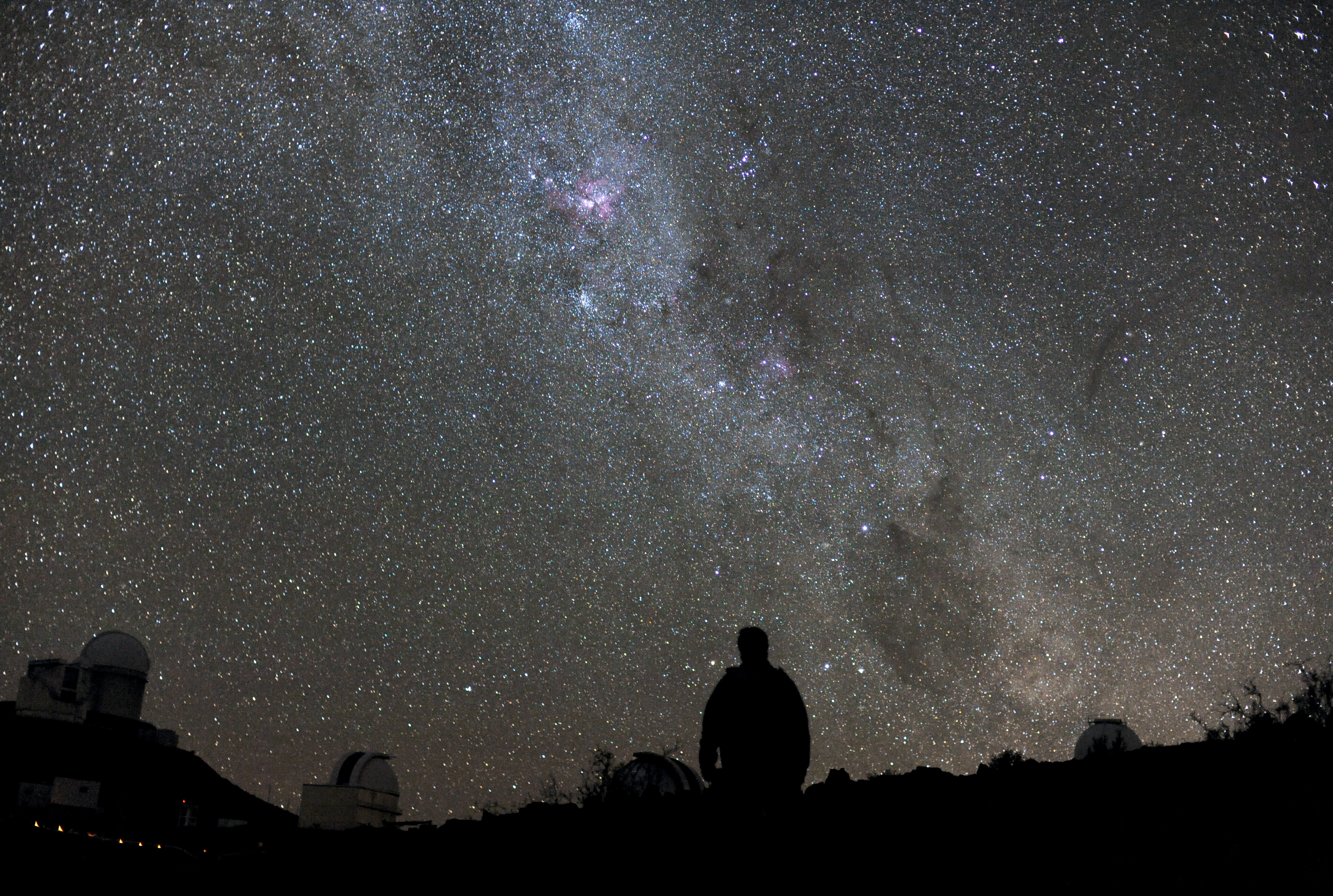
Wide-field Milky Way photography remains possible from Bortle 5 sites during June-August when the galactic core transits overhead. A 14-24mm wide-angle lens at f/2.8 with 15-second exposures at ISO 3200 captures the core structure without a tracking mount. Post-processing with stacking software (Sequator or Starry Landscape Stacker) improves signal-to-noise ratio significantly.